

2019 Race Crew
The Leaders and Best— 2019 Bridgestone World Solar Challenge Race Crew
These 20 members of our team were selected to build, test, and race our newest vehicle across the Australian outback in October of 2019. Composed of mechanical, electrical, aerodynamic, and strategy engineers and sponsorship, marketing, and operations members, this Race Crew will race for a victory in the 2019 Bridgestone World Solar Challenge.

Andrew Dickinson | Project Manager
Computer Science Engineering, Class of 2021
Grand Haven, MI
When Andrew joined the 2017 Race Crew to work on Novum, it led to an incredible journey through the design, manufacture, and race of a world-class vehicle. He gained tremendous experience in multidisciplinary engineering and felt that he had no choice but to carry these experiences forward. As the Project Manager, Andrew focuses on the team's preparation for the Bridgestone World Solar Challenge by not only ensuring we build a high quality car, but also that we are are organized, well-trained, and ready for the challenge ahead.
Photo by Zachary J. Goldsmith.

Matt Foutter | Crew Chief
Aerospace Engineering, Class of 2021
Lexington, MA
Matt is a second year student with a major in Aerospace Engineering. Matt joined the team as a freshman for the novel ideas used in aerodynamics to gain a competitive edge. He has continued with the team for its intense environment and application to practical engineering. Matt began the year as a member of the aerodynamics division and finished leading the study of Electrum's vehicle dynamics to ensure a stable and safe car. In 2018, Matt drove Novum across the finish line to a second place finish in the American Solar Challenge. This result motivates Matt to push for a strong commitment to the car and high work quality this summer. Matt aims to help guide Electrum to Michigan's first BWSC victory as this year's Crew Chief.
Photo by Zachary J. Goldsmith.

Bennet McGlade | Engineering Director
BSE Mechanical Engineering, 2019
Silver Spring, MD
Bennet is a recent graduate from the department of Mechanical Engineering with a minor in Electrical Engineering. Coming to Michigan, he sought an opportunity to gain hands-on design experience and was drawn to the Solar Car Team. After leading the design of the composite structures on the team's previous car, Novum, in 2017, he took over the role of Engineering Director in the fall of 2018. In this role he is responsible for overseeing the design and manufacture of the best car possible. He is excited to test the car's capability at the Bridgestone World Solar Challenge in Australia before starting work in November.
Photo by Zachary J. Goldsmith.

Andrew Olejniczak | Head Strategist
Earth and Environmental Sciences, Class of 2021
Macomb, MI
After joining the Strategy Division in the Fall of 2017, Andrew raced as the Head Strategist in the American Solar Challenge in 2018. As the Head Strategist, he evaluates tradeoffs being made by the engineers on the team and determines the optimal race strategy. After the intense and rewarding experiences of racing in 2018 and being involved in the design process this year, Andrew could not pass up the opportunity to build and race Electrum in the Bridgestone World Solar Challenge.
Photo by Zachary J. Goldsmith.

Zack Piper | Operations Director
Mechanical Engineering, Class of 2022
Bloomfield Hills, MI
Zack read about the Michigan Solar Car Team in Popular Mechanics magazine back in 2009. Ten years later, as a Michigan freshman, he joined the team as the Operations Director. Zack loves the thrill of competition and working with the team to solve engineering and logistical challenges. As Operations Director, he manages all team logistics, manufacturing, and sourcing. This includes material and process sourcing, as well as getting the team, the car, and the proper materials to Australia. Inside the workspace, he collaborates with suppliers and team members, secures material, and works on composite layups to ensure the car is built to win. Zack can’t wait to achieve his lifelong dream of racing in the BWSC this fall.
Photo by Zachary J. Goldsmith.
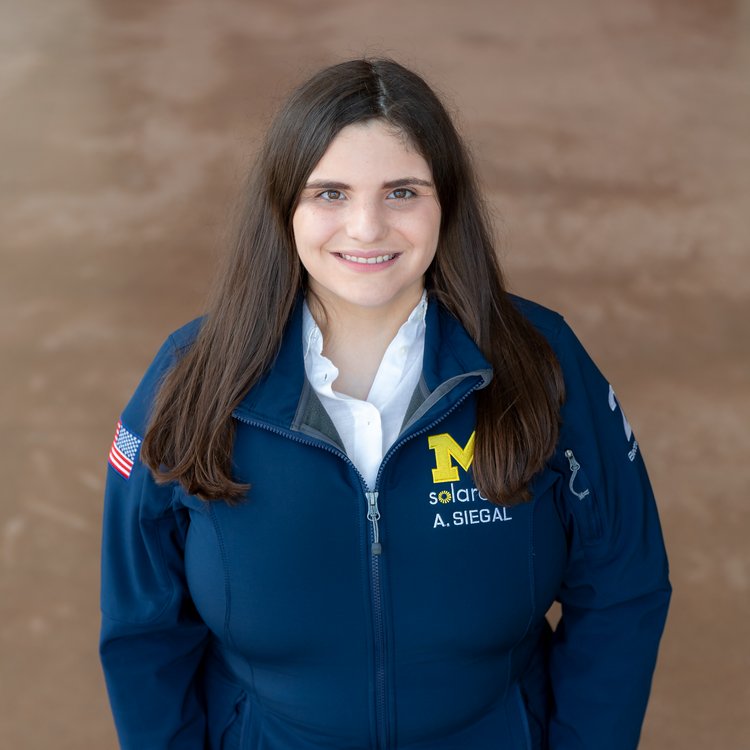
Abby Siegal | Business Director
BA Economics, 2019
Beverly Hills, MI
Abby came to Michigan with no intention of getting involved with an engineering project team, but after hearing about an opportunity to join the Business Division and help fund the project she fell in love with the environment. After working on the team for a majority of Novum's cycle, Abby was excited to return to the team as the Business Director for Electrum's cycle. As Business Director, Abby is responsible for ensuring that the team has the best tools and materials at their disposal. Her favorite part of her job is supporting the Engineering Division in making the car as fast as possible. She is excited to go to Australia for the Bridgestone World Solar Challenge this fall before starting work in January.
Photo by Zachary J. Goldsmith.

Noah Evile | Mechanical
Mechanical Engineering, Class of 2021
Haleiwa, HI
Noah first recognized his passion for engineering during 7th grade when he started LEGO robotics. Since then, he has competed in various robotics competitions from FIRST Robotics to VEX Robotics throughout his middle school and high school career. Solar Car happens to be his next challenge. He was drawn in by the rich history and wanted to know what it takes to reach that caliber. Noah has been a member of the team for two years and was the Mechanical Lead for the Electrum cycle. As the Mechanical Lead he enjoyed being a part of nearly every aspect of the car and viewing it as a whole instead of individual systems. He looks forwards to seeing everything come together and is ready for any other challenges that will needed to be solved.
Photo by Zachary J. Goldsmith.

Sam Fontes | Race Strategist
Computer Science Engineering, Class of 2021
Jacksonville, FL
Sam is a rising junior studying Computer Science at the University of Michigan. As a member of the team's Strategy Division, Sam combines his love for math and programming to help develop a strategy for racing Electrum as effectively as possible. After racing Novum in the American Solar Challenge last summer, he is excited to return to Michigan's race crew this summer and take on the challenge of building, testing, and ultimately racing Electrum on the world stage in the BWSC this fall.
Photo by Zachary J. Goldsmith.

Rishabh Goel | Race Electrical Engineer
Electrical Engineering, Class of 2021
New Delhi, India
Rishabh is a rising junior studying electrical engineering at the University of Michigan. He always had a passion for electronics and looked to further his skills by joining the Solar Car Team. After 2 years of being on the team, he gained hands-on experience in designing, building, and testing the electrical systems of the car, and joined race crew to experience the high-pressured competitive environment and test his skills. He is excited to spend the summer with 2019’s Race Crew working on Electrum and racing in the BWSC.
Photo by Zachary J. Goldsmith.

Zac Goldsmith | Race Operations Engineer and Race Media
Industrial and Operations Engineering, Class of 2021
Clinton Township, MI
Zac first discovered the Solar Car Team when he saw Maize and Blue at the Chicago Museum of Science and Industry. As a sophomore studying Industrial and Operations Engineering, Zac joined the team to pursue his love of engineering, operations management, and media. Zac oversees the team's composites manufacturing and is responsible for ensuring that all the composite components are built according to the design. While he is not on Solar Car's time, Zac is a freelance photographer in Southeast Michigan, and as the team's media specialist, he is able to exercise his passion for photography as he documents the team's successes both at home and abroad.
Photo by Zachary J. Goldsmith.

Matt Karls
| Race Mechanical Engineer
Materials Science and Engineering, Class of 2020
Ann Arbor, MI
Hailing from Ann Arbor Michigan, Matt joined the team in Fall of 2019 with the intent of aiding the manufacturing of Electrum, but was quickly drawn into mechanical design. Matt is now the brakes lead, contributes to suspension design, and will be racing as a Mechanical Engineer. He is keen to take his skills to the world stage, keeping the mechanical systems honed over the thousands of miles to come on the way to and in Australia.
Photo by Zachary J. Goldsmith.

Daniel Kohler
| Race Battery Engineer
Computer Engineering, Class of 2021
West Bloomfield, MI
Daniel is a rising senior in Computer Engineering. Daniel joined the team in the Winter of 2018 after his friend enlightened him about the team's impressive legacy. After only a month's time as a member, Daniel already had a battery pack design which helped his fellow recruits win 2018's internal design competition. Having proved his hardwork and dedication, Daniel was offered a spot as the battery engineer for the 2018 ASC Race Crew. With design and hands-on electrical experience under his belt, Daniel continued his role on the team as High Voltage lead for his junior year. Daniel is excited and determined that the electrical improvements he and his teammates have made for this year's solar car will be enough to win BWSC. Daniel is also an avid skateboarder.
Photo by Zachary J. Goldsmith.

Tyler Phillips
| Race Operations Engineer
Industrial and Operations Engineering, Class of 2021
Davison, MI
Tyler came to Michigan with Solar Car in the back of his mind, after a chance to speak with the 2015 Project Manager, Pavan Naik. Motivated by his past experiences in FIRST Robotics, Tyler joined Solar Car to continue his learning outside of the classroom. Tyler was inspired to join the 2019 BWSC Race Crew through his interactions with older members who have also raced. He chose operations because it allows him to combine his love of creative problem solving with solar car racing. Tyler can be found floating around the workshop moving supplies, fixing various tools, and working on the replacement for the team's semi trailer. He hopes to pursue a career in the automotive industry after graduating with a degree in Industrial and Operations Engineering.
Photo by Zachary J. Goldsmith.

Filip Platek
| Race Mechanical Engineer
Aerospace Engineering, Class of 2021
Corte Madera, CA
Filip Platek is a rising junior studying Aerospace Engineering. He grew up in the Bay Area, California, where he got his start in design teams though high school rocketry competitions. Craving a similar experience in college, he joined the University of Michigan Solar Car Team’s Aerodynamics Division during his first semester. Filip spent the school year leading the design of Electrum's aerobody. Over the summer, Filip spends his time manufacturing composite parts and maintaining the mechanical systems of the solar car. He joined race crew to see the design to completion, and is beyond excited to travel to Australia and race on the world stage.
Photo by Zachary J. Goldsmith.

Juliette Shaheen
| Race Weather Strategist
Computer Science, Class of 2021
Frankenmuth, MI
Coming from a small town and a small private school, Juliette didn't know about Solar Car before coming to U of M. So, as her luck often has it, she unknowingly joined one of the most competitive and demanding student project teams. But in the wise words of Bob Ross, it was a "happy accident" because Juliette finds that new and difficult challenges and experiences are the key to living fully. She is excited to combine her family's history of automotive and computer engineering with her own love of problem solving and technology to both help the team build the best car they can and also to delve into the enticing black box that is weather predicting, in order to (hopefully) capture a win in Australia. Regardless, she can't wait to thrive in the desert heat and make friends with some Australian chickens, preferably silkies.
Photo by Zachary J. Goldsmith.
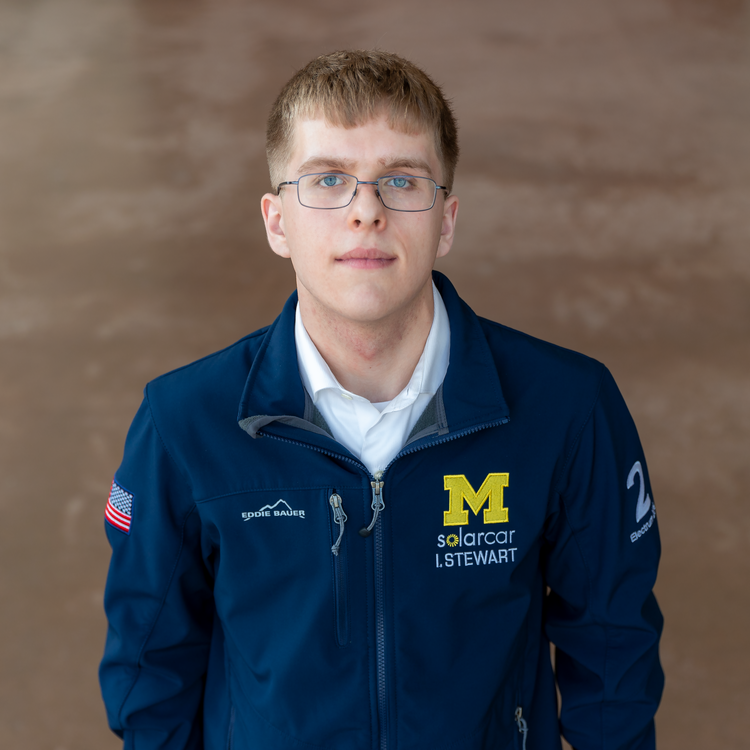
Ian Stewart
| Race Microsystems Engineer
Electrical Engineering, Class of 2022
Grosse Ile, MI
Ian is a first-year student who came to Michigan looking to join a student project team. His high school experiences of becoming an Eagle Scout, spending four years as the Lead Programmer of a FIRST Robotics Competition team he helped found, and varsity rowing had taught him that successful teams demand dedication, excellence, and high character from their members. After working with several teams on campus, he committed himself to the Solar Car Team, which best exemplifies these values. Ian earned a spot on the 2019 BWSC Race Crew as the team’s Race Microsystems Engineer — designing, building, and testing the electrical components that allow the car to function. His experiences working on Electrum have led him to declare Electrical Engineering as his major, and after returning from Australia he hopes to pursue a sequential Master’s degree before graduating. In his free time, he enjoys reading, volunteering, biking, erging, hiking, scuba diving, and playing Forum Mafia.
Photo by Zachary J. Goldsmith.

Logan Suarez Parmer
| Race Weather Strategist
Computer Science Engineering, Class of 2021
Cherry Hill, NJ
Logan originally joined Solar Car because of his interest in exploring the future of solar powered engineering; however, after working with such a collaborative and innovative team, he decided to spend his next six months building and racing one of the world's fastest solar cars. As a member of the Weather Strategy Division, most of his work centers around designing and programming tools to aid in race decision-making in the remote Australian Outback. During the build cycle, Logan also helped manufacture the majority of the car's structural and aerodynamic composite parts. Outside of Solar Car, Logan enjoys reading, working on his programming side-projects, and playing board and video games with his friends. Logan is excited to race at BWSC alongside his teammates (and hopefully take home the first-place trophy), before returning to class in the Winter Semester.
Photo by Zachary J. Goldsmith.
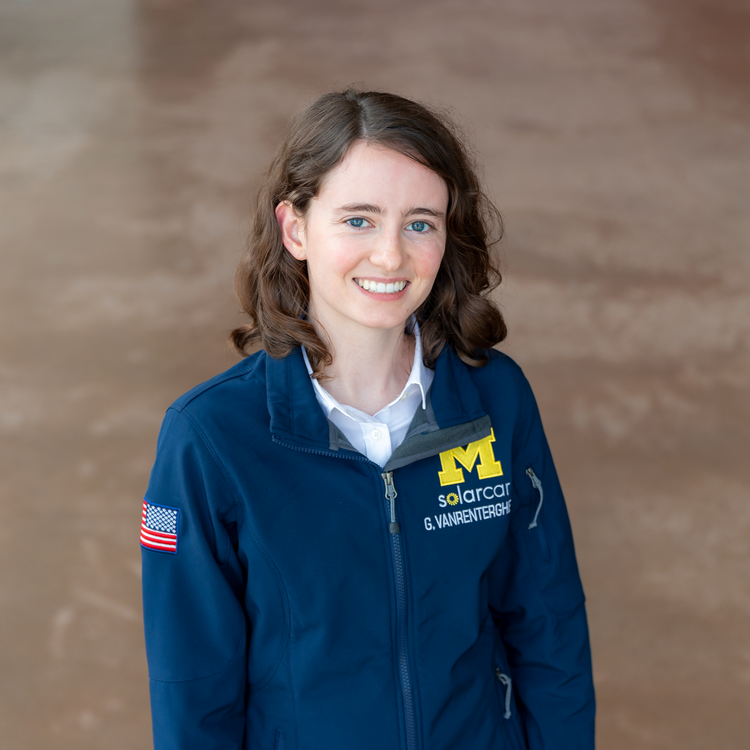
Grace VanRenterghem
| Race Mechanical Engineer
Materials Science and Engineering, Class of 2020
Ann Arbor, MI
Grace VanRenterghem first joined Solar Car for its intense and collaborative environment. During the design cycle, Grace was a member of the composites division; she worked on the design of the car's many composite components and created all of the composite manufacturing plans. She has enjoyed learning all the skills associated with making and racing the car. After work sessions, Grace enjoys playing board games and basketball with her teammates. Grace's go to fun fact is that she's an identical twin. Grace is incredibly excited to compete at the international level at BWSC and to experience racing alongside other teams through the Outback.
Photo by Zachary J. Goldsmith.

Bassel Yassine
| Race Mechanical Engineer
Mechanical Engineering, Class of 2022
Northville, MI
It was seeing Novum and Aurum in the Solar Car workspace that ultimately pushed Bassel to choose to continue his education at the University of Michigan - having the ability to design, build, and race an engineering marvel from the ground up was an opportunity that was too hard to pass up. A Race Mechanical Engineer, Bassel has been able to design multiple mechanical components on Electrum, aide in a majority of the cars composite manufacturing, and acquire real life engineering skills that he wouldn't otherwise be able to in a classroom setting. He is humbled to have been with the team since the start of this project and beyond ecstatic to see it through to completion with a hopeful win in Australia. In his free time, Bassel enjoys hanging out with his two pet cats, Eskandar and Aantar.
Photo by Zachary J. Goldsmith.
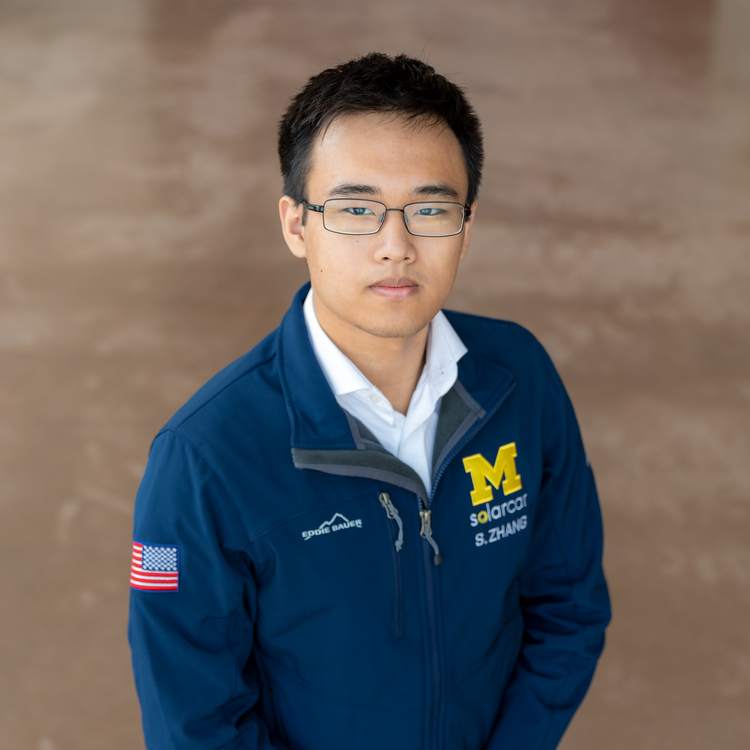
Steven Zhang
| Race Operations Engineering
Mechanical Engineering, Class of 2022
Havertown, PA
Steven Zhang is a sophomore studying Mechanical Engineering, with a minor in Electrical Engineering. Under the Operations Division, he oversees metals manufacturing for the team and is responsible for interfacing and maintaining relationships with machinists across the state. In this role, he manages supply chain logistics, working with metals suppliers, and machine shops to produce components for the team's race vehicle and support equipment. 2019 is Steven's first year with the team, and he looks forwards to competing in Australia this fall. Reports claim he can taste the difference between various aluminum alloys.
Photo by Zachary J. Goldsmith.

Prof. Neil Dasgupta
Faculty Advisor
Neil Dasgupta is an Assistant Professor in the Department of Mechanical Engineering at the University of Michigan, and faculty advisor of the UM Solar Car Team. He earned his Ph.D. from Stanford University in 2011. Prior to joining University of Michigan in 2014, he was a postdoctoral fellow at the University of California, Berkeley. He is the recipient of a U. S. Department of Energy EERE Postdoctoral Research Award (SunShot Fellowship), the AVS Student Award for Best Graduate Research in ALD, and a Stanford Graduate Fellowship. His research focuses on the intersection of nanotechnology, manufacturing, and energy conversion.
Photo by Epik Studios.

Umesh Patel
Faculty Advisor
Umesh Patel is Senior Director, Business Engagement, at the University of Michigan and works closely with companies to engage them in the University's research, education, and service missions. Mr. Patel came to the University from consulting firm Accenture, where he was a Senior Manager managing business process and technology change for a diverse group of global 500 corporations and government clients. Prior to joining Accenture, Mr. Patel was a Design Engineer with Westinghouse Electric Corporation where he designed and developed electrical control equipment. Mr. Patel holds an MBA from Carnegie-Mellon University and a BS in Electrical Engineering from The Ohio State University (note: despite his Buckeye roots, Mr. Patel is married to a U-M alumna and the proud parent of twin daughters who are both U-M alumnae).
Photo by Epik Studios.

Charles (Chuck) Hutchins
Chuck Hutchins graduated from the University of Michigan with a BSE in Mechanical Engineering in 1957, along with his wife, Ann, who he met and married in 1956. He spent 8.5 years at Buhr Machine Tool Co in AA where, in 1962, under his leadership, they acquired one of the very first N/C machine tools with a transistorized control. Buhr had four N/C machines running 24/7 when he left in 1966. In 1969 he became the co-founder of Manufacturing Data Systems Inc (MDSI) on Plymouth Road and is a pioneer of computer-integrated manufacturing. In 1989, Chuck was approached by team leader Susan Fancy to see if he would be a sponsor. He quickly saw one of the most "Real World" student projects he had ever seen. Chuck became the #1 fan of the University of Michigan Solar Car Team and he and Ann have been supporters ever since. He has traveled with the team on every race except '90 and '93 in Australia, and plans to travel to Australia again this fall for the 2019 Bridgestone World Solar Challenge.
Photo by Evan Dougherty, Michigan Engineering Communications and Marketing.
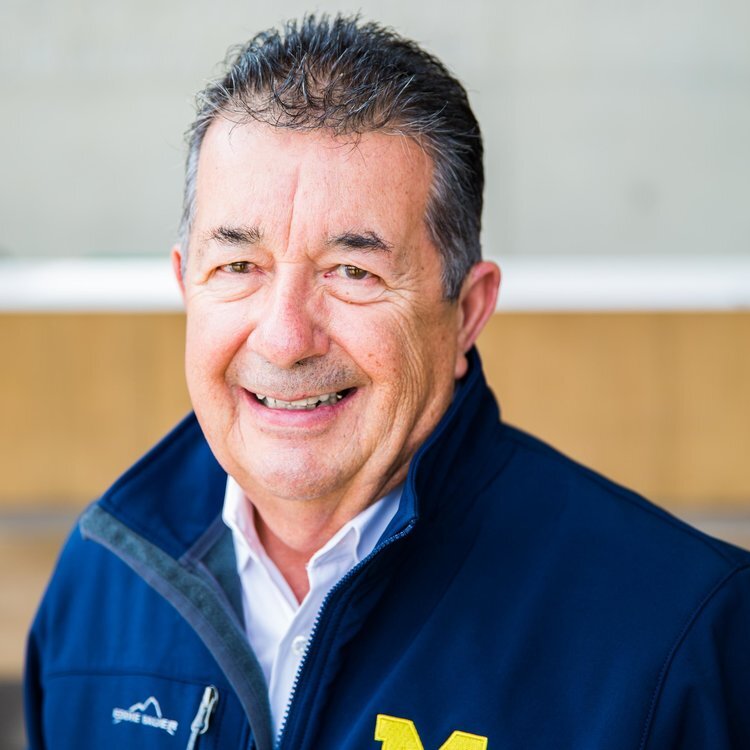
Ignacio (Chito) Garcia
Chito Garcia is a retired scientific instrument maker from the University of Michigan College of Engineering. His first involvement was in 1991 when he machined parts for the 1993 team's solar vehicle. In 1993, Chito was asked by the team to join them in racing the new car, "Maize and Blue" in the World Solar Challenge in Australia. Since then, he has been involved with the team every year and has been to every World Solar Challenge and American Solar Challenge UM Solar Car has competed in. He is a valued member of the team and has been passing down the team's history and knowledge year after year.
Photo by Benjamin Bear Photography.